
28 juil. 2026
10 min de lecture
Un nombre croissant de personnes ignorent totalement la page de résultats de recherche. Elles posent une question à Gemini, lisent la réponse générée et passent à autre chose sans cliquer sur un seul lien. Si votre marque est mentionnée dans cette réponse, vous gagnez en visibilité. Sinon, vous ne faites tout simplement pas partie de la conversation.
Le problème, c'est que les outils de suivi traditionnels n'ont pas été conçus pour cela. Ils suivent les backlinks, les positions de recherche et les mentions sur les réseaux sociaux, mais pas ce qu'un modèle d'IA dit de vous dans une réponse générée. Gemini ne publie pas de liste classée que vous pourriez auditer. Il synthétise des sources, et les marques qu'il nomme changent selon la formulation d'une question, le contenu qu'il juge crédible et la structure de votre site.
Ce guide de configuration du suivi de visibilité dans la recherche IA explique ce que sont réellement les mentions dans Gemini, comment les suivre de façon fiable, ce qui influence l'apparition de votre marque et ce que vous pouvez faire pour améliorer votre visibilité au fil du temps.
Quand quelqu'un pose une question à Gemini, il génère une réponse écrite et peut y nommer des marques, produits ou sites web spécifiques. C'est une mention dans Gemini : votre marque référencée ou recommandée à l'intérieur d'une réponse générée par IA, plutôt que listée dans les résultats de recherche.
Suivre cela est plus difficile que le suivi de positions classique. Les réponses de Gemini sont générées de zéro à chaque fois, façonnées par la formulation de la question et par la façon dont il interprète le contenu disponible. Une vérification manuelle vous donne un instantané d'une réponse à une requête. Elle ne vous dira pas si votre marque apparaît de façon constante sur les questions que votre audience pose réellement, ni si un concurrent est recommandé à votre place.
À mesure que davantage d'utilisateurs obtiennent des réponses directement de l'IA sans cliquer jusqu'aux résultats de recherche, apparaître dans ces réponses compte. Savoir où vous vous situez actuellement est le point de départ. La même idée s'applique d'une plateforme à l'autre — les types de citations IA varient selon les moteurs, et la façon dont une marque est référencée dans Gemini peut être très différente de son apparition dans ChatGPT ou Perplexity.
PromptRush automatise le suivi des mentions de marque dans Gemini AI : au lieu de lancer des requêtes manuelles en espérant que les résultats soient représentatifs, vous obtenez un suivi cohérent sur les questions qui comptent vraiment pour votre marque. Si vous voulez une vue d'ensemble avant de vous lancer, la page comment ça fonctionne couvre le tableau complet. Sinon, les étapes ci-dessous vous configureront et vous mettront en suivi.
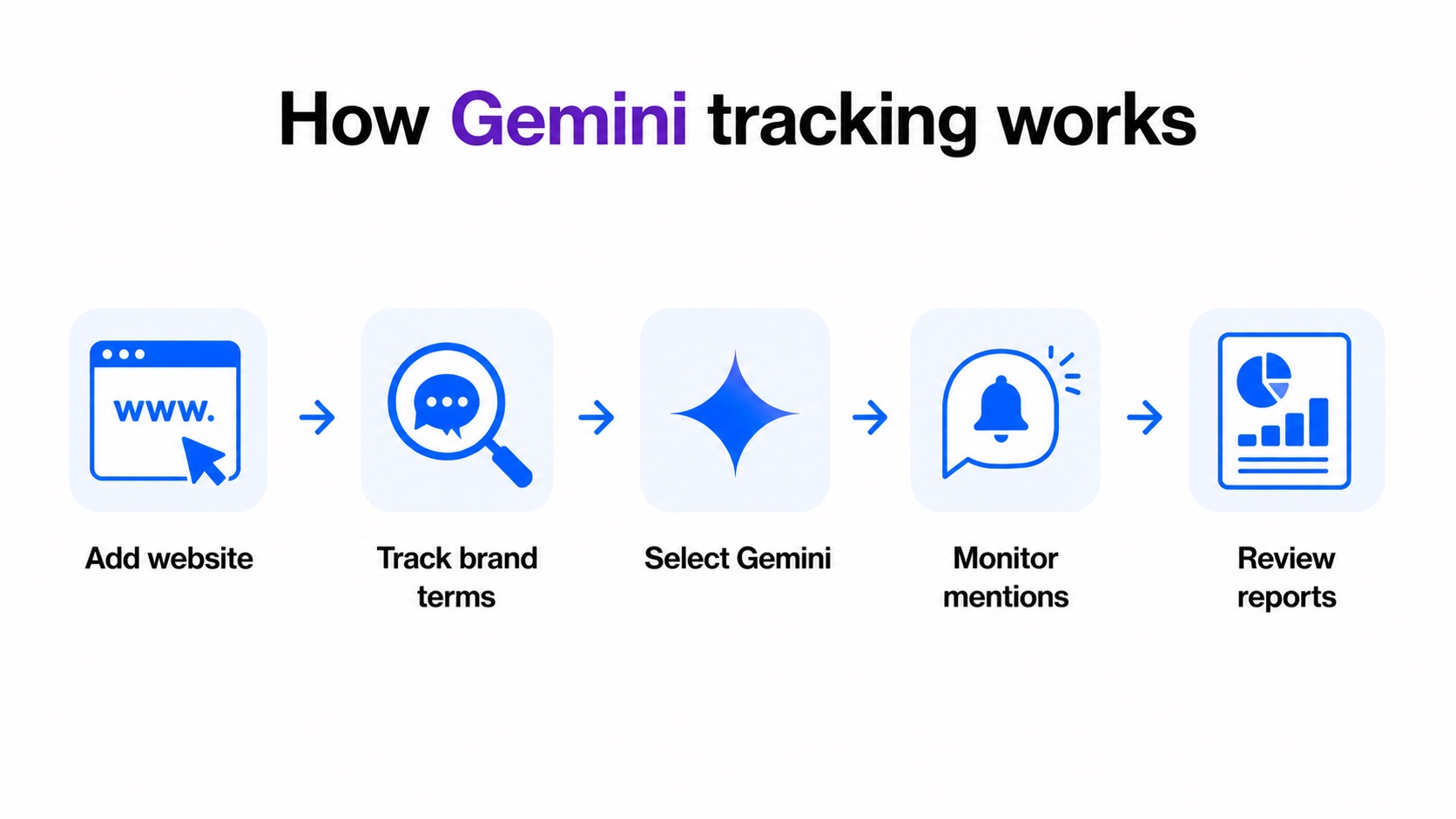
Rendez-vous sur PromptRush et créez un compte gratuit. L'onboarding est simple et prend quelques minutes. Une fois connecté, vous arrivez sur le tableau de bord principal, où la configuration se poursuit.
Saisissez votre domaine et les termes de marque que vous souhaitez surveiller. Cela inclut le nom de votre marque, les variations courantes et les noms de produits clés. Si votre marque est fréquemment abrégée ou mal orthographiée, ajoutez aussi ces versions ; plus vos termes sont précis, plus vos résultats seront pertinents.
Dans le sélecteur de plateformes, choisissez Gemini comme plateforme suivie. PromptRush surveille comment Gemini référence votre marque à travers différents types de requêtes et formats de réponse, vous donnant une vue cohérente plutôt que des instantanés ponctuels. Vous pouvez voir l'ensemble des fonctionnalités sur le Tracker de Visibilité Gemini.
Votre rapport montre à quelle fréquence votre marque apparaît dans les réponses de Gemini, quelles catégories de requêtes la font surgir et comment cela se compare aux concurrents. Une présence forte signifie que votre marque apparaît de façon constante sur les requêtes pertinentes. Si elle apparaît rarement ou pas du tout, les facteurs de visibilité et les tactiques abordés dans les sections suivantes sont un bon point de départ.
PromptRush envoie des rapports hebdomadaires automatisés, vous n'avez donc pas besoin de vous connecter et de relancer des requêtes manuellement. Au fil du temps, ces mises à jour montrent si votre visibilité s'améliore ou décline et vous aident à relier tout changement de contenu ou de site à des évolutions dans la façon dont Gemini référence votre marque.
Tout bon guide de suivi des mentions de marque en IA doit couvrir non seulement comment surveiller les mentions, mais ce qui les motive. Gemini ne sélectionne pas ses sources au hasard. Plusieurs facteurs influencent l'apparition de votre marque dans une réponse générée.
Suivre vos mentions au fil du temps, comme vu dans les étapes ci-dessus, est le moyen le plus fiable de voir comment ces facteurs jouent pour votre marque en ce moment.
Un guide complet du suivi de marque en IA va au-delà de la surveillance. Il inclut de savoir comment agir sur ce que vous trouvez. Les tactiques ci-dessous se concentrent sur l'optimisation pour les réponses générées par IA spécifiquement, ce qui exige une approche différente de la montée dans les classements de recherche traditionnels — la discipline plus large est traitée dans notre guide sur l'optimisation pour moteurs génératifs.
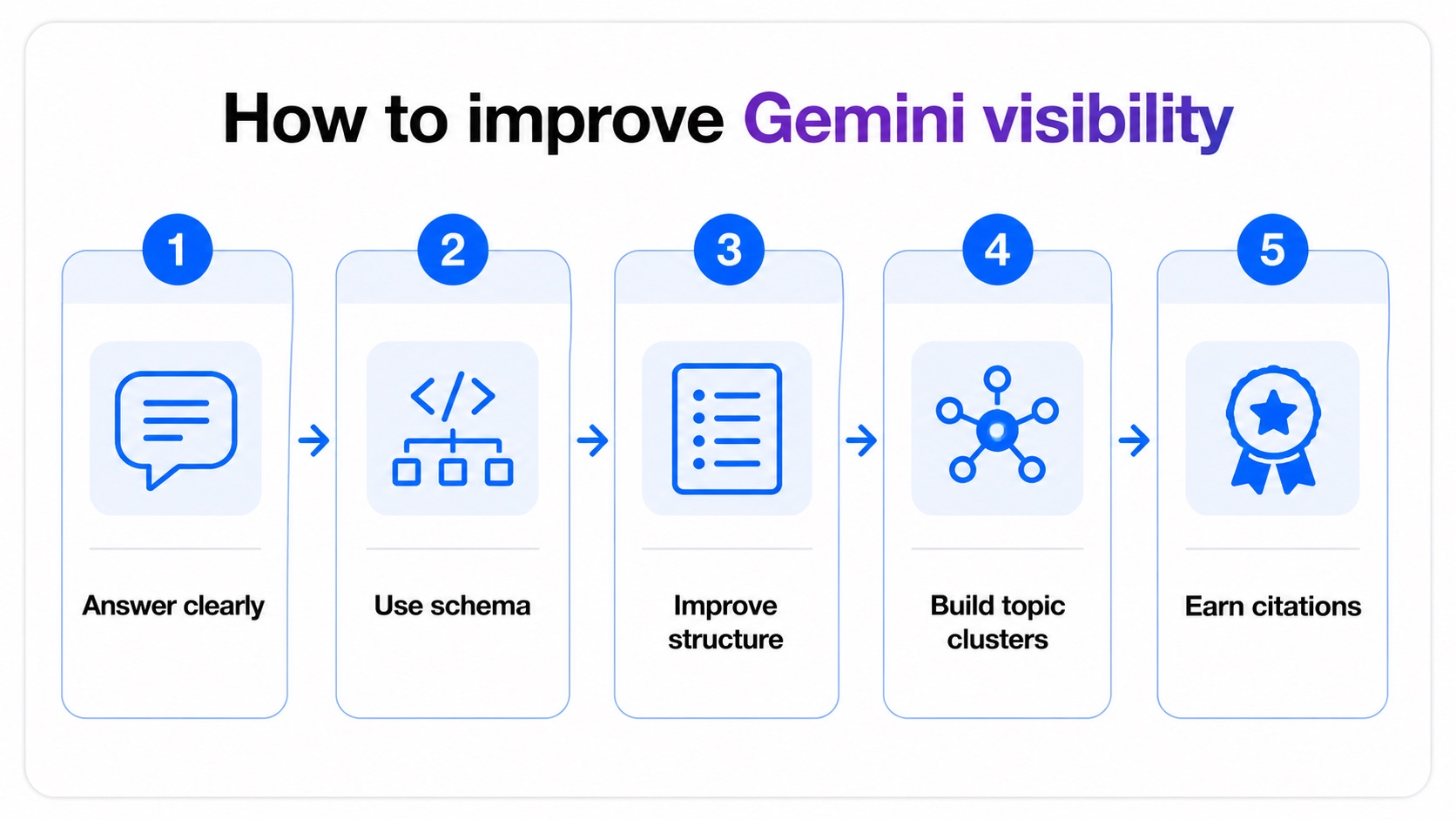
Gemini extrait des réponses de la longueur d'une réponse à partir du contenu, la structure de vos pages compte donc. Utilisez des titres sous forme de questions et commencez par la réponse avant de développer. Si la réponse directe est enfouie trois paragraphes plus bas, elle a moins de chances d'être reprise. Le schéma FAQ peut aider à signaler à Gemini qu'une section de votre contenu répond directement à une question précise.
Là où la section précédente abordait les données structurées comme facteur de visibilité, l'étape pratique est de réellement les implémenter. Commencez par les types de schéma les plus pertinents pour votre contenu : Article, FAQPage, HowTo, Product et Organisation. Ils aident Gemini à catégoriser correctement votre contenu et rendent l'attribution plus probable lorsqu'une requête pertinente arrive.
Des paragraphes courts, une hiérarchie de titres claire et un formatage scannable aident tous. Gemini lit la structure comme du sens, si bien qu'une page bien organisée signale crédibilité et pertinence d'une manière qu'un pavé de texte dense ne fait pas. Utilisez des puces et des listes numérotées là où le contenu l'appelle vraiment, et mettez en gras les termes clés là où cela ajoute de la clarté plutôt que de la décoration.
Une seule page forte sur un sujet pèse moins qu'un cluster de contenu connexe qui pointe vers elle. Publier sur des sous-thèmes au sein de votre domaine central signale une profondeur thématique, et le maillage interne entre ces pages le renforce. Gemini est plus enclin à référencer un domaine qui couvre un sujet en profondeur qu'un domaine aux pages isolées.
Quand des sources externes crédibles référencent votre marque, cela augmente la probabilité que Gemini vous traite comme une source fiable digne d'être citée. Le PR digital, la recherche originale et le contenu réellement utile que d'autres publications veulent lier sont les voies les plus efficaces ici. C'est un effort de plus long terme, mais l'effet cumulé sur la visibilité IA le rend digne d'être intégré à votre stratégie.
Le suivi manuel a un plafond. Vous pouvez lancer quelques requêtes et revérifier la semaine suivante, mais vous ne voyez qu'une fraction de la façon dont votre marque apparaît sur les questions que les gens posent réellement. Les réponses varient selon la formulation et, sans surveillance cohérente de ces variations, le tableau reste incomplet.
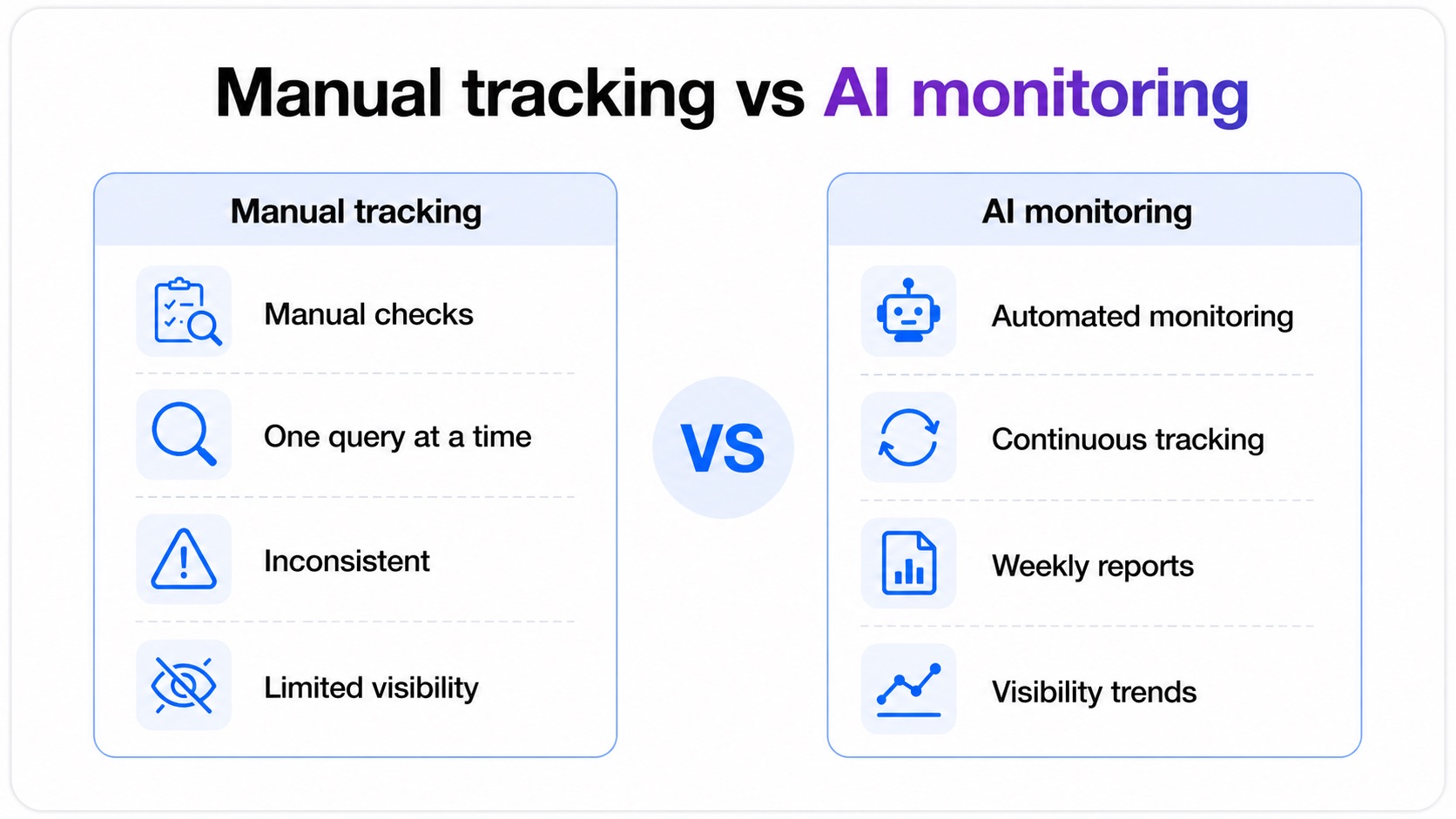
PromptRush.ai surveille votre marque dans les réponses de Gemini automatiquement, suit l'évolution de votre visibilité au fil du temps et livre des rapports hebdomadaires sans exiger de requêtes manuelles. Que vous configuriez le suivi de visibilité dans la recherche IA pour la première fois ou que vous repreniez à partir d'un audit précédent, les données restent à jour et cohérentes. Gemini n'est que l'un des moteurs couverts par PromptRush — vous pouvez suivre la même marque dans le tracker ChatGPT, le tracker Perplexity et bien d'autres au sein d'un seul outil de SEO pour LLM.
Si vous souhaitez voir comment cela fonctionne spécifiquement pour votre marque, vous pouvez réserver une démo avec l'équipe.
PromptRush.ai propose un essai gratuit qui vous donne un accès complet au suivi de Gemini dès le départ. Vous pouvez démarrer votre essai gratuit, passer par la configuration et voir comment votre marque apparaît actuellement dans les réponses de Gemini avant de vous engager sur un plan. C'est une manière pratique d'obtenir une base de référence réelle avant de décider de continuer.
Les réponses de Gemini peuvent changer à chaque requête et évoluer plus largement à mesure que Google met à jour le modèle sous-jacent. Il n'existe pas de cycle de mise à jour fixe sur lequel planifier, c'est pourquoi une surveillance continue compte plus que des vérifications manuelles périodiques. Les rapports hebdomadaires offrent une vue fiable de l'évolution de votre visibilité dans le temps plutôt qu'un instantané unique.
Chaque plateforme génère des réponses avec des modèles différents, s'appuie sur des sources différentes et pondère la crédibilité du contenu différemment. Une marque qui apparaît de façon constante dans les réponses de Gemini peut à peine apparaître dans ChatGPT, ou inversement. Si vous investissez dans la visibilité IA, un suivi multiplateforme donne une image plus complète de votre position réelle — voir le guide sur comment se positionner sur Perplexity pour voir en quoi l'approche diffère selon le moteur.
Cela se résume généralement à un ou plusieurs des facteurs évoqués plus haut : structure du contenu, autorité thématique, adéquation de vos pages avec la façon dont les gens formulent leurs questions, et capacité de Gemini à analyser et attribuer facilement votre contenu. Les tactiques d'optimisation pour moteurs de réponse de ce guide sont un point de départ concret.
Le processus de configuration couvert dans ce guide consiste à ajouter votre domaine, saisir vos termes de marque et sélectionner Gemini comme plateforme suivie. Il n'y a aucun code à écrire, aucune intégration à configurer et aucun bagage technique requis. La plupart des utilisateurs sont opérationnels et en suivi en quelques minutes après la création de leur compte.
Co-Founder & CEO, PromptRush
Rafayel Begoyan is the Co-Founder and CEO of PromptRush. With over a decade of experience in SEO, spanning technical audits, international SEO, content strategy, and organic growth, he now focuses on the intersection of search optimization and AI visibility. Rafayel writes about how brands can adapt to generative search and get discovered in an AI-first world.
blogAuthor.viewProfileObtenez un rapport gratuit de visibilité IA sur ChatGPT, Gemini, Perplexity, AI Overviews et AI Mode. Nous analysons votre site et vous envoyons les résultats par e-mail.
Obtenir mon rapport de visibilitéSans inscription ni carte bancaire