
Free AI Visibility CheckerSee how ChatGPT, Gemini, Perplexity and Google AI talk about your brand. Free, no credit card.
Check my brandAI visibility tracking built for your market
SaaSE-commerceRetailFintech & FinanceHealthcareTravel & Hospitality

Jul 15, 2026
10 min read
AI answers now come with links attached: a small chip with a site's logo, an underlined phrase inside a sentence, a list of sources beside the answer. Those links are citations — the way AI tools show where an answer came from. What most people miss is that not all citations are the same, and the differences matter a lot if you care about whether your brand gets seen and clicked.
This guide explains the main types of AI citations in plain language: what each one looks like, why some are more valuable than others, and how they show up differently across ChatGPT, Perplexity, Gemini, Copilot, and Google's AI surfaces.
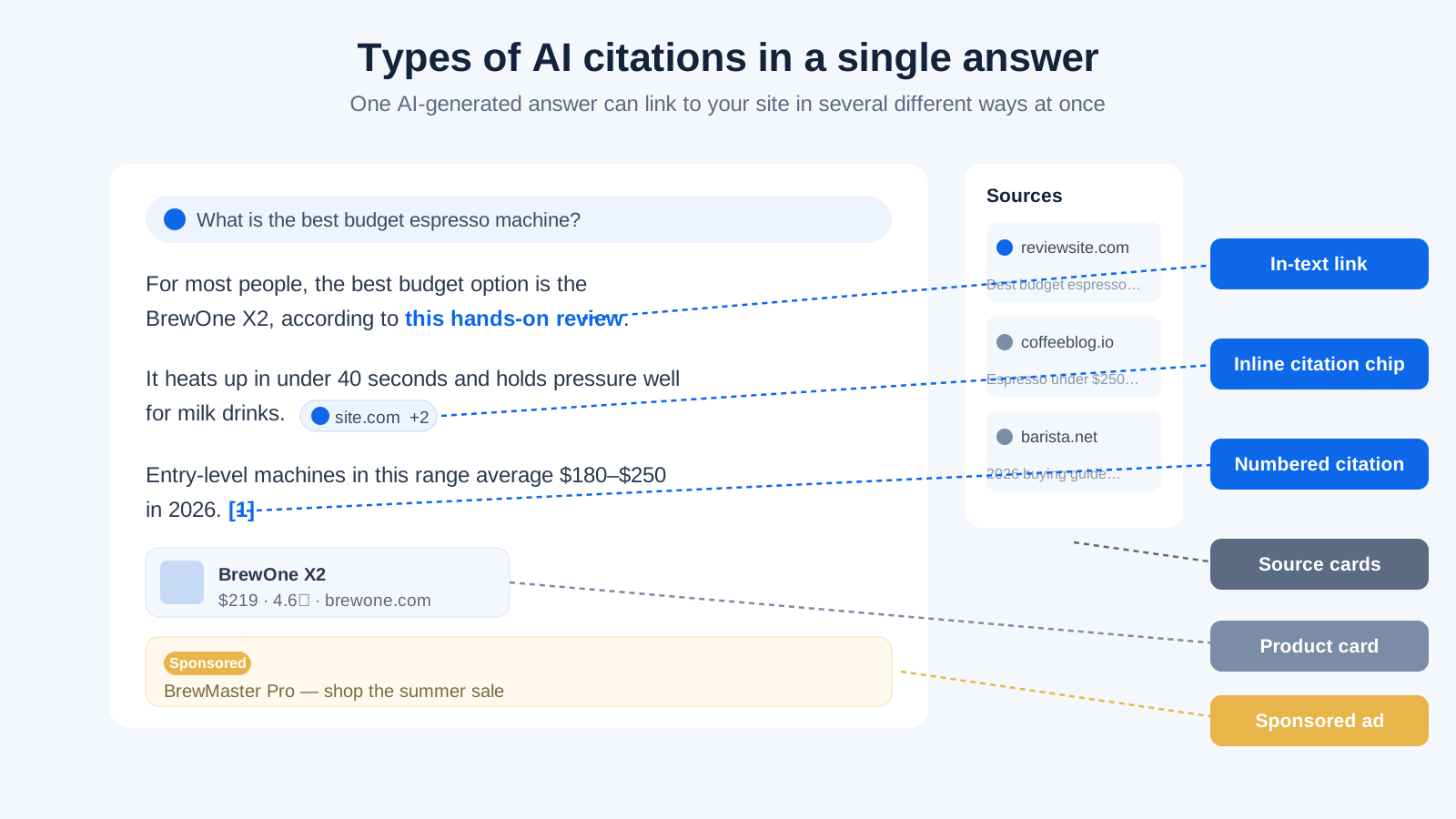
A few years ago, search meant a list of blue links. Now AI tools write a direct answer and attach citations throughout it. In 2026, Google updated how AI Overviews and AI Mode display these links so they appear right next to the sentence they support, with hover previews that show the site name and page title before a click. A single answer can now point to your website in several different ways at once.
This is the key idea: being cited is not one thing. You can be cited in a way a reader is likely to click, or in a way they will probably never notice. Understanding the types is the first step to knowing which kind you are actually getting.
One boundary before the list: this guide covers linked citations — placements that carry a URL back to a source. When an AI names your brand in the answer text without linking to it, that is a brand mention, a separate signal measured with its own metrics. The guide to ranking on Perplexity explains that split in detail as explicit citations versus implicit mentions.
Each citation type has a different look and a different chance of earning a click. Here are the ones you will run into most often.
An in-text link is an underlined word or phrase woven directly into a sentence, like a normal hyperlink in an article. The link is the text — the reader is looking straight at it as they read the answer.
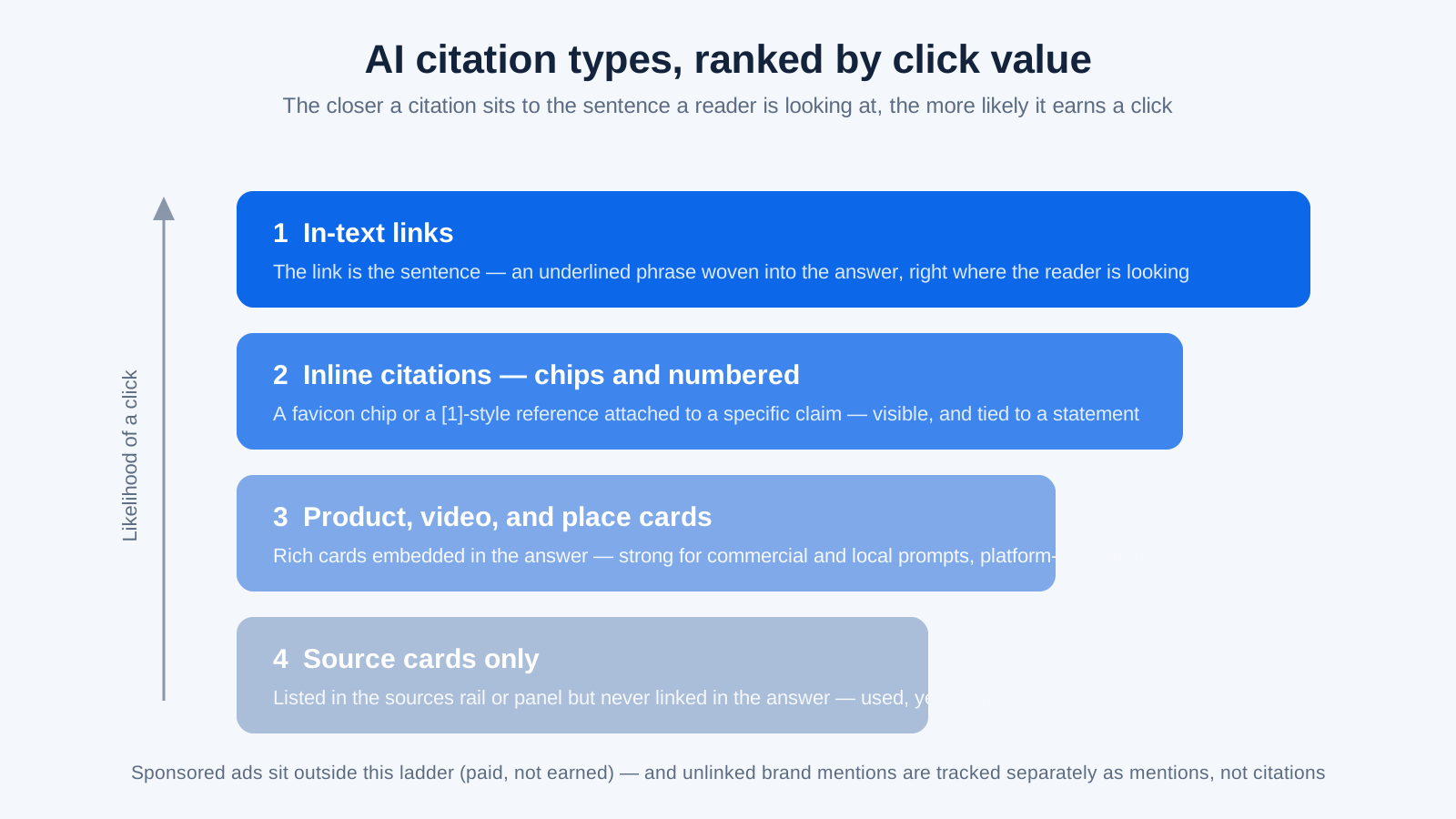
These are usually the highest-value placements. When an AI weaves your page into the sentence itself, you are part of the answer, not a footnote. Google's 2026 link updates pushed both AI Overviews and AI Mode toward more of these, placed beside the exact claims they support.
An inline citation is a small chip that appears right after a sentence, usually showing a site's favicon and sometimes a name with a "+2" when several sources back the same claim. ChatGPT, Gemini, Copilot, and Google AI Mode all use this format.
Chips are valuable because they are tied to a specific statement. If your site is the chip next to "the best budget option is…", that is a strong, visible placement — one step less prominent than an in-text link, but far ahead of anything outside the answer.
A numbered citation is the footnote-style reference — a small [1] or [2] attached to a claim, linking out to the source. Perplexity is built around this format and attaches numbered citations densely throughout every answer.
Functionally, numbered citations work like chips: a visible marker tied to a specific claim. The difference is recognition. Readers who grew up on Wikipedia treat a numbered reference as a credibility signal, which is part of why Perplexity answers feel research-grade.
Source cards are the list of previews — usually a title, domain, and short snippet — shown in a rail, panel, or expandable "Sources" section beside or below the answer. Every major platform has some version of this layer.
A source card still counts as a citation. But when your page appears only here, and never as a link inside the answer itself, you were used but rarely seen: the reader has to actively look away from the answer to notice you. The difference between an inline citation and a source-card-only citation is the difference between being front and center and being tucked away.
AI answers increasingly embed rich cards: product cards with a price, rating, and store link for shopping questions; video cards (usually YouTube) for how-to questions; place cards with ratings and addresses for local questions.
These are earned placements, not ads. When ChatGPT shows a product card for a commercial prompt, that card carries a real product URL — if it is yours, that is a citation of your product page in the highest-intent moment possible. Video and place cards usually point to a platform (YouTube, a maps listing) rather than a typical article page, so they matter most for brands that publish video or have physical locations.
Some AI answers now include paid placements — labeled ad blocks and sponsored shopping carousels injected into or beside the answer. Google runs them in AI Overviews and AI Mode, and ChatGPT has introduced its own ad format.
Keep these strictly separate from the types above. An ad is bought; every other type on this list is earned. Mixing the two in your measurement makes organic visibility look better or worse than it really is — and it hides the one distinction buyers themselves react to, since an earned citation reads as editorial validation while a sponsored card reads as a purchase.
Two things look adjacent to citations but should stay out of your citation counts.
The first is the unlinked brand mention, covered above: your name in the answer text with no URL. It builds recall and drives branded follow-up searches, but it sends no direct traffic, so it belongs in a separate metric tracked alongside citations, not inside them.
The second is query fan-out. When Google's AI Mode receives a question, it quietly breaks it into multiple sub-queries and searches them all in parallel before writing one synthesized answer. Those sub-queries are not links and not citations — but they are a strategy signal. They reveal the follow-up questions Google associates with a topic, which is a ready-made list of content worth creating if you want to be retrieved for more of the answer.
If you only track how many times you are cited, two brands can look identical while getting completely different results. One might be woven into answers as in-text links that readers click; the other might only ever appear in a source rail nobody opens.
The type tells you the quality of the placement. It is the difference between "we appear in AI answers" and "we appear as the clickable link right next to the main recommendation." The second version is what actually drives visits and awareness.
This is also why tracking over time matters. Whether an answer appears at all — and how it cites — changes by country, device, and even from one run of the same prompt to the next, so a single check is not reliable. What you want is your mix of citation types across many samples, not a one-off snapshot.
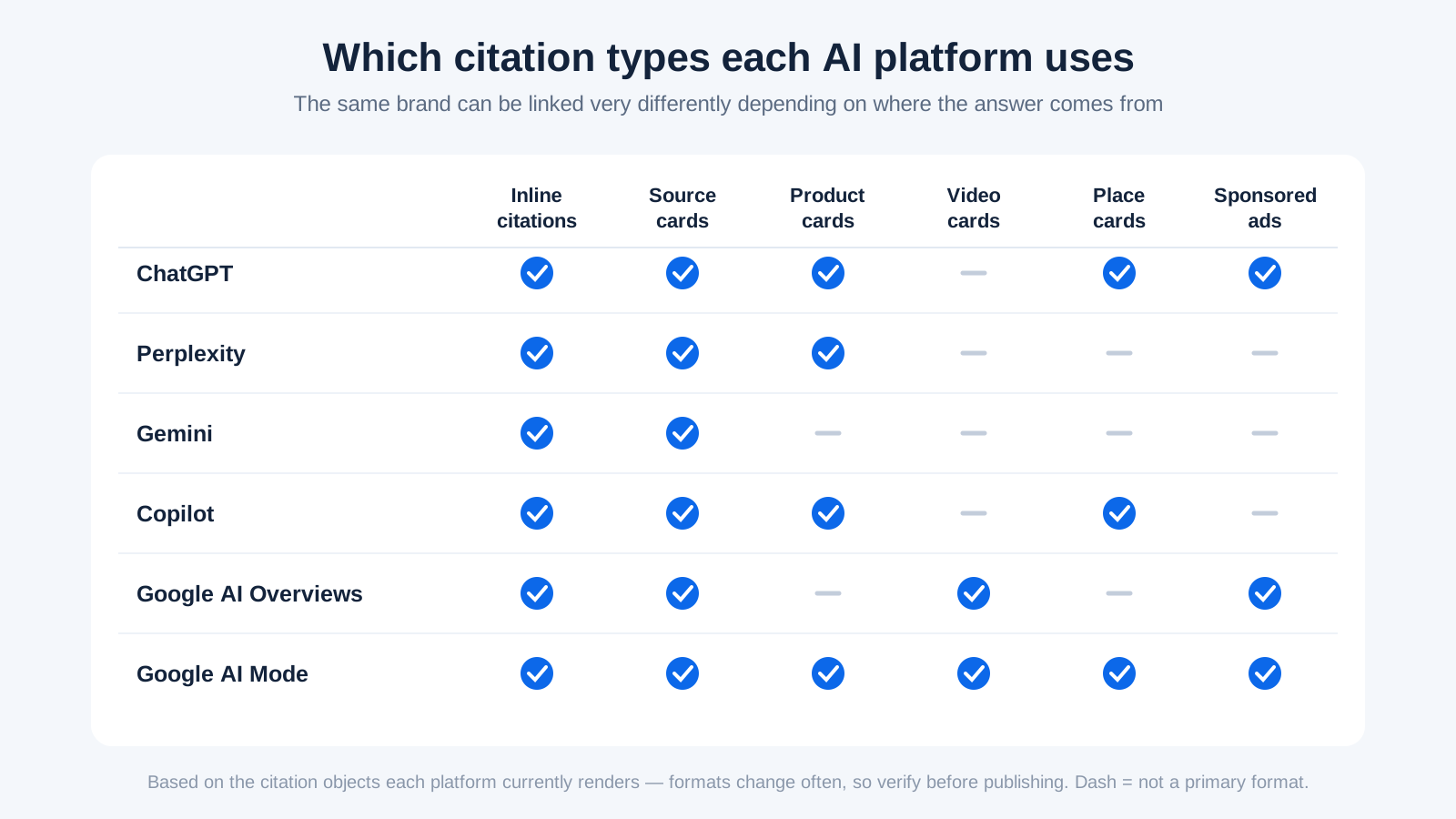
Each AI tool cites sources in its own style, so the same brand can be treated very differently depending on where the answer comes from.
ChatGPT uses inline citation chips, in-text links, a sources panel, and — for commercial prompts — product cards and its own ad format. Perplexity leans on dense numbered citations with a full source list, plus shopping cards for product questions. Gemini keeps it simple: citation chips and a sources rail. Copilot mirrors the chip-plus-sources pattern and adds shopping and place cards. Google's AI Overviews and AI Mode carry the richest mix — in-text links with hover previews, source cards, video and place cards, product cards, and sponsored ads.
Because the formats differ per platform, comparing yourself fairly means looking at each one separately. The AI Overview tracker and ChatGPT tracker from PromptRush monitor these surfaces individually, so a strong showing on one does not hide a weak one on another. From there you can see which platforms treat your content as a primary source and which barely surface it. For Perplexity specifically, the guide to the best Perplexity rank trackers compares the leading tools head to head.
Travel answers lean heavily on booking and review sites. See AI visibility for hotels.
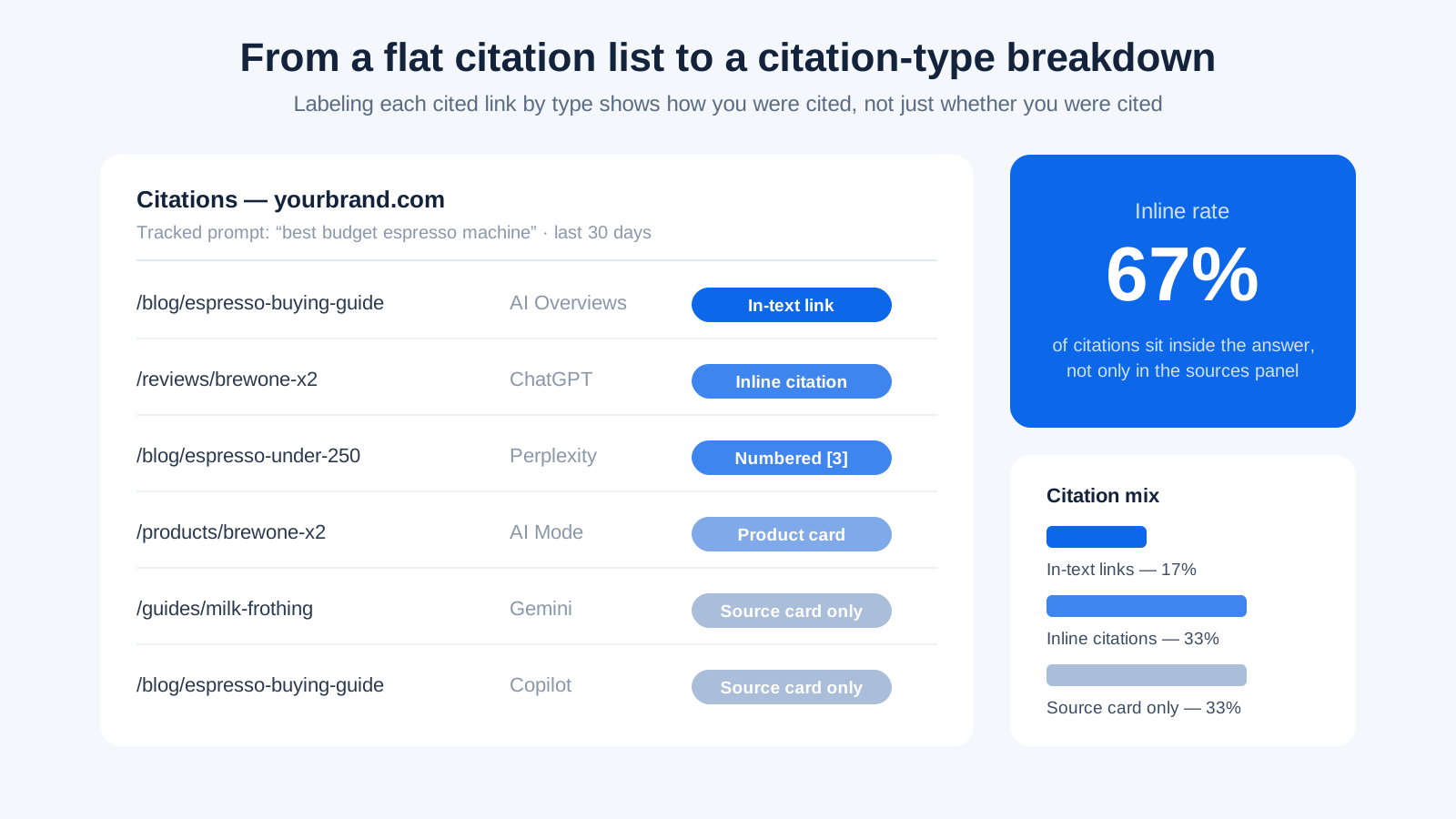
Knowing the types is useful only if you can see which ones you are getting. Instead of showing citations as one flat list, PromptRush labels each cited link by its type — in-text link, inline citation, numbered citation, product card, source card only — so you can tell not just whether you were cited but how.
That unlocks a few practical views. You can see your inline rate for a domain — the share of your citations that sit inside the answer versus only in the sources panel — and track it over time. You can spot the rare, high-value in-text links you have won. And when you open a single tracked prompt, you can see exactly how each AI platform cited you for that specific question, side by side — see how it works for the full tracking flow. With that, a vague "we're being cited" turns into a clear picture of where you are visible and where there is room to improve.
An AI visibility tracker records which citation types each engine uses for your prompts. The natural next step from there is diagnosis: a low inline rate usually means your pages are being retrieved but not quoted, which points back at content structure — clear claims, extractable answers, and data an engine can attach to a specific sentence.
A citation is a link showing where the AI got its information. It can appear as an underlined phrase inside a sentence, a small favicon chip or numbered reference after a claim, a rich card such as a product or video card, or an entry in the list of sources beside the answer.
In-text links are usually the most valuable because the reader is looking directly at them as they read, followed closely by inline citation chips and numbered citations tied to specific claims. Source-card-only citations still count but earn far fewer clicks, since the reader has to look away from the answer to notice them.
No. Sponsored ads and paid shopping carousels are bought placements, while citations are earned when an AI chooses your content to support an answer. Measure them separately so paid and organic visibility never get mixed together.
Not necessarily. Platforms like ChatGPT and Google AI Mode show organic product cards — with a price, rating, and a link to the product page — chosen by the engine, alongside clearly labeled sponsored ones. The organic cards are earned citations of your product pages; only the labeled sponsored units are ads.
Query fan-out is the technique Google's AI Mode uses to answer a question: it splits the prompt into multiple sub-queries and searches them in parallel before writing one answer. Fan-out queries are not citations of your site, but they reveal the related questions Google connects to a topic, which makes them a useful content-planning signal.
Yes. PromptRush classifies each cited link by type and shows your mix per platform, so you can see whether you appear as a prominent in-text link, an inline citation, a product card, or only in the sources panel — and how that changes over time.
Co-Founder & CEO, PromptRush
Rafayel Begoyan is the Co-Founder and CEO of PromptRush. With over a decade of experience in SEO, spanning technical audits, international SEO, content strategy, and organic growth, he now focuses on the intersection of search optimization and AI visibility. Rafayel writes about how brands can adapt to generative search and get discovered in an AI-first world.
View profileGet a free AI visibility report across ChatGPT, Gemini, Perplexity, AI Overviews, and AI Mode. We scan your site and email the results.
Get my visibility reportNo sign-up or credit card required