Apr 10, 2025
12 min read
If you're trying to understand how to rank in AI search, the first step is learning how AI search systems actually work and how they choose which content to include in their answers.
Traditional search engines rank pages based on keywords and backlinks. AI search works differently. It tries to understand the user's question, find the most relevant information across multiple sources, and then generate a direct answer.
This means your content is no longer competing only for a blue link. It's competing to be included in the AI's answer. To do that, your content needs to match intent, clearly explain topics, and be easy for AI systems to extract and summarize.
To understand how content gets featured in AI search, it helps to look at the process step by step. When someone asks a question, AI systems analyze the query, search for relevant content, and then select the most useful information to include in the answer. Each of these steps affects whether your content gets picked up or ignored.
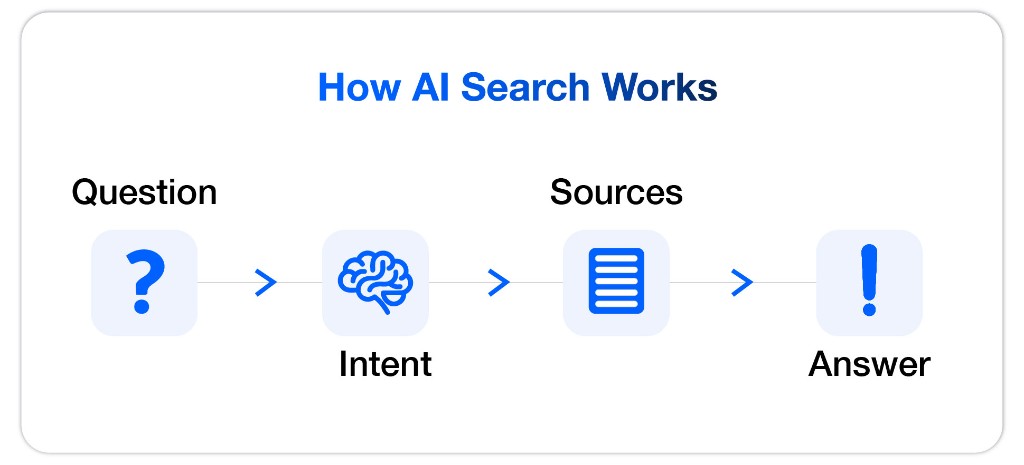
When someone types a question into an AI search tool, the system tries to understand the meaning behind the question. It looks at the topic, the intent, and the type of answer the user expects.
For example, a search like "how to rank in AI search" tells the system that the user is looking for an explanation and practical steps. So the AI starts looking for pages that clearly explain the process, break it into steps, and cover the topic from different angles.
This is why content that fully explains a topic performs much better in AI search. The clearer and more complete your content is, the easier it is for AI to use it as a source.
Large language models are trained to prioritize patterns associated with useful, relevant, and well-structured information. When generating answers, they don't choose sources randomly. They look for content that shows clear expertise, strong topical relevance, and good structure.
Websites that publish helpful content consistently, cover topics in depth, and are mentioned on other websites are more likely to be used as sources. Over time, AI systems begin to recognize these websites as reliable references for certain topics.
AI search tools usually don't copy one page. They collect information from several sources, identify the most useful parts, and combine them into one answer.
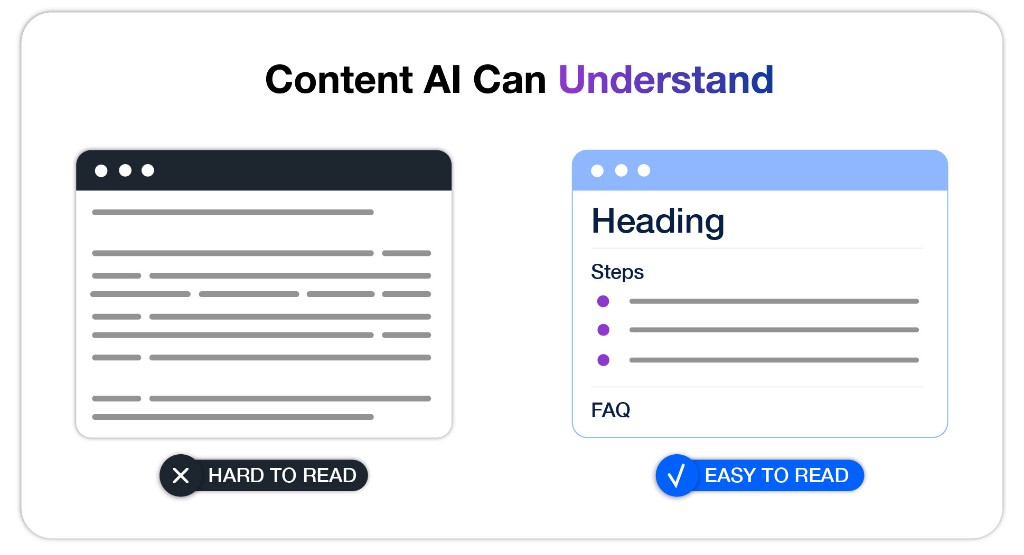
During this process, AI systems prefer content that is easy to extract. Clear headings, short paragraphs, definitions, lists, and step-by-step explanations make it much easier for AI to understand what your page is about and use it when generating answers.
If you want to learn how to rank in AI search results, you need to create content that is easy for AI to understand and use, but also feels helpful and natural for real readers.
The good news is that content that works well for AI usually works well for people too. The key is to be clear, organized, and focused on answering questions directly. When your content is easy to read and easy to understand, it becomes much easier for AI systems to extract information and include your website in AI-generated answers. This is one of the factors that can improve how often your content is used in AI-generated answers.
When writing for AI search, clarity matters more than anything. Your content should explain the topic in a way that someone new to it can understand. This means defining terms, giving examples, and explaining why the topic matters.
It also helps to think about what the reader is trying to achieve. Are they trying to learn something, solve a problem, compare options, or follow steps? When your content helps the reader do something or understand something, AI systems are more likely to see it as useful content.
AI search tools often pull short passages that directly answer a question. Because of this, it helps to include clear, direct answers throughout your content.
For example, after a heading, you can start with a short paragraph that answers the main question, and then continue with a more detailed explanation. This makes it easier for AI systems to extract the key information. You can also include definitions, short explanations, step-by-step instructions, FAQ sections and lists, since these formats are easier for AI to understand and summarize.
Even very good content can be difficult to use if it is not well organized. Structure helps AI systems understand how your content is organized and which parts are most important.
Try to organize your content so that each section has a clear topic, clear headings, and logically grouped information. Think of your article as something that should be easy to scan. If a reader can quickly find the answer they need, AI systems can do the same.
Content quality is very important, but AI systems still need to find, crawl, and understand your website before they can use your content. This is where technical SEO plays a big role. If your pages are difficult to crawl, slow to load, or poorly organized, your content may never be discovered or used by AI search systems.
To understand how to rank in AI search engines, it's important to remember that your content needs to be accessible before it can be selected or featured. Search engines and AI systems still rely on crawling and indexing to discover pages, understand website structure, and identify which content is relevant and useful.
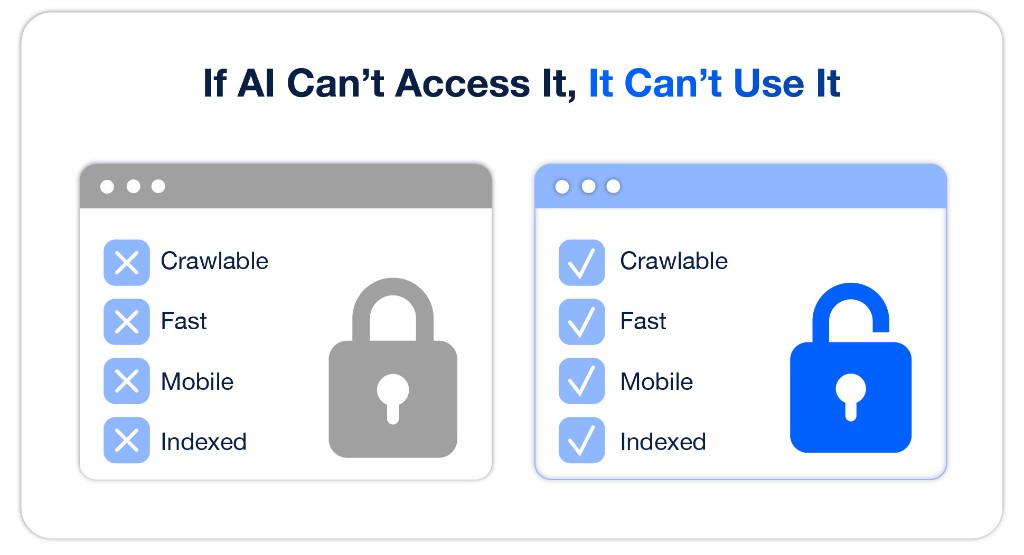
First, make sure search engines can actually access and index your pages. This includes having a clean robots.txt file, an updated XML sitemap, and proper index settings on important pages.
It's also important to use canonical tags correctly and avoid duplicate pages. When search engines understand which pages should be indexed, your content becomes easier to discover and more likely to appear in AI search results.
Your website structure helps search engines understand how your content is organized and how different pages are connected. Try to make sure important pages are easy to reach within a few clicks and that related content is connected through internal linking.
A clear structure includes logical categories, internal links between related articles, and topic clusters that group similar content together. This helps AI systems see your website as a reliable source on specific topics and makes it easier for them to find relevant content on your site.
Page speed is another important factor. Slow websites create a poor user experience and can also make it harder for search engines to crawl pages efficiently.
To improve page speed:
Core Web Vitals, which measure loading speed, interactivity, and visual stability, are also important for overall site performance and visibility in search.
Some technical issues can prevent search engines and AI systems from accessing your content properly.
Common issues include:
Regular technical audits help identify and fix these problems. When your website is technically healthy, your content becomes much easier for AI systems to find, understand, and use.
Creating good content consistently can take a lot of time, especially when you're trying to cover topics in depth and keep your content updated. This is where AI tools can be very helpful. They can help you research topics, identify content gaps, improve existing articles, and make sure your content covers a topic properly.
When used correctly, AI tools can help you work faster, make better decisions about what to write, and improve your chances of showing up in AI search results.
AI search systems try to understand topics, not just keywords. This is why it's important to cover related ideas and subtopics around your main topic.
NLP and topic modeling tools can help you identify:
This helps you create content that covers a topic more completely, which makes it easier for AI systems to understand what your page is about and when it should be shown.
Over time, websites publish a lot of content, and it becomes difficult to track which pages are performing well and which ones need improvement.
AI tools can help automate content audits by:
Regular content audits help keep your website relevant and improve your overall visibility in AI search.
AI tools can also help you make smarter content decisions. They can analyze search results, identify patterns in top-ranking content, and suggest ways to improve your article.
For example, AI tools can help you:
These insights can help you create content that is more aligned with what both users and AI systems are looking for.
As AI search becomes more common, authority and trust matter more than ever. AI systems give users reliable and helpful information, so they naturally look for sources that show expertise, consistency, and credibility. If your website regularly publishes helpful content, covers topics in depth, and is mentioned across the web, it becomes much more likely that AI systems will use your content when generating answers.
Building authority takes time, but it has a very strong impact on whether your content appears in AI Overviews and AI-generated search results.
E-E-A-T stands for experience, expertise, authority, and trust. These signals help search engines and AI systems understand whether a source is reliable and knowledgeable about a topic. In AI search, this becomes even more important because AI systems are trying to generate answers people can trust.
Websites that show real expertise, publish accurate content, and clearly demonstrate who is behind the content are more likely to be used as sources. This includes having clear author information, well-written content, and a consistent focus on specific topics.
Topical authority means becoming a reliable source on a specific subject. This usually happens when a website covers a topic from different angles and connects related articles together. Over time, that approach creates a strong content structure where each article supports another. Search engines and AI systems begin to recognize that your website has deep knowledge in a specific area, which increases the chances of your content being used as a source in AI-generated answers.
AI systems also pay attention to how often your brand or website is mentioned across the internet. Mentions, citations, and backlinks act as signals that your website is recognized by other sources.
When your brand appears in articles, research, directories, reviews, or industry websites, it strengthens your credibility. These signals help AI systems see your website as a trustworthy source of information, which can improve your chances of appearing in AI-generated answers.
AI systems try to understand who created the content and whether the source is trustworthy. This is why author profiles, company information, and brand presence are important.
When your website clearly shows who the authors are, what the company does, and what topics you specialize in, it becomes easier for AI systems to connect your content to a real entity. Over time, strong author profiles and brand signals help build trust, and trusted sources are more likely to appear in AI-generated answers.
Once your content is optimized for AI search, the next step is understanding how it actually performs. In traditional SEO, you would track rankings and organic traffic. In AI search, visibility looks different. You need to track where your brand appears in AI-generated answers, how often you are mentioned, and whether AI search is bringing traffic to your website.
Tracking AI visibility also helps you understand how AI search is presenting your brand and content to users. In many cases, people may see your brand mentioned in an AI answer before they ever visit your website. When you track where and how your brand appears, you can start to understand which topics you are associated with and where you have opportunities to improve your presence.
AI search visibility is not measured by rankings alone. Instead, it's measured by how often your brand appears in AI-generated answers and how visible your content is across different AI platforms.
Important metrics include how often your brand is mentioned in AI answers, how frequently your website is used as a source, and how visible you are compared to competitors. Over time, these metrics help you understand whether your content strategy is improving your visibility in AI search.
One way to understand your visibility is to regularly check how AI tools respond to questions related to your industry. You can search for important keywords, industry questions, and problem-based queries, and then see if your brand or website appears in the answers.
This process helps you understand which topics you are visible for and which topics you are missing. It also helps you see how AI systems describe your brand and which competitors appear alongside you.
Manually checking AI answers can take a lot of time, which is why AI tracking tools are becoming more important. These tools help monitor brand mentions, citations, and visibility across AI search platforms like ChatGPT, Google AI Overviews, Gemini, and Perplexity.
Tools like PromptRush help track how often your brand appears in AI-generated answers, which sources are used, and how your visibility changes over time. This kind of data helps you understand whether your content and SEO efforts are actually helping you rank in AI search results.
It's also important to measure whether AI search is bringing people to your website. This can include traffic from Google AI Overviews, Bing Copilot, Perplexity, and other AI-powered search tools.
You may notice increases in branded searches, direct traffic, and referral traffic from AI platforms. These signals help you understand the real impact of AI search on your website and whether your visibility is turning into actual visitors and potential customers.
To rank in AI search results, your content needs to clearly answer questions, explain topics in a simple way, and be well structured. AI systems prefer content that is easy to understand and easy to extract, with clear headings, short paragraphs, and direct answers.
Many website owners don't realize that their brand can appear in AI answers even without a traditional ranking. To rank in AI search, you need to monitor brand mentions, citations, and visibility across AI platforms like ChatGPT, Google AI Overviews, and Perplexity.
Ranking in AI search engines usually takes time because AI systems need to recognize your website as a reliable source. This happens when you consistently publish helpful content, cover topics in depth, and build authority over time.
Content that performs well in AI search results usually focuses on answering questions clearly and covering a topic fully. Articles with clear structure, definitions, and step-by-step explanations are easier for AI systems to use when generating answers.
There is no single factor that guarantees you will rank in AI search, but websites that publish helpful, well-structured content and build topical authority over time have a much higher chance of being featured in AI-generated answers.
See how AI models mention your brand across ChatGPT, Gemini, Perplexity, and more.
Get Started FreeNo credit card required